For many homeowners in the Hoboken and Fort Lee area, the discovery of PFAS in the local water supply has led to a common reaction: buying a water filter. Whether it’s a sleek pitcher on the counter or a filtration system built into a high-end refrigerator, the assumption is that “filtered” is synonymous with “PFAS-free.”
However, as we progress into 2026, environmental testing is revealing a frustrating truth: many standard household filters are not the impenetrable shields we hope they are. In fact, “forever chemicals” can linger in filtered water systems due to specific chemical properties, improper maintenance, and the rise of “short-chain” variants that are notoriously difficult to capture.
The False Sense of Security in Standard Filtration
The primary reason PFAS persist in filtered water is that most common household filters were never designed to catch them. The standard carbon filters found in many popular pitchers and refrigerator dispensers are excellent at removing chlorine—which improves taste and odor—but they often lack the density or “contact time” required to snag microscopic PFAS molecules.
As noted in our PFAS overview, these chemicals are defined by the carbon-fluorine bond, one of the strongest in organic chemistry. This bond makes the molecules incredibly stable and slick. Without specialized media or high-pressure membranes, many PFAS chains simply “slide” through standard activated carbon like sand through a coarse sieve.
Recent studies, including research from Duke University, have shown that while some filters might reduce PFAS by a significant percentage initially, their effectiveness can drop off rapidly as the filter ages.
The Maintenance Trap: When Filters Become Sources
Perhaps the most alarming finding in recent testing data is the phenomenon of “breakthrough.” This occurs when a filter becomes so saturated with contaminants that it can no longer hold them. At this point, the filter doesn’t just stop working—it can actually begin “shedding” the accumulated chemicals back into the “clean” water.
In some cases, filtered water has been found to have higher concentrations of PFAS than the unfiltered tap water because of a saturated filter that hasn’t been changed on schedule. For a family in a high-rise building relying on an older refrigerator filter, this creates a hidden hazard.
Common reasons for filter failure include:
- Exceeding Gallon Limits: Most filters are rated for a specific number of gallons. In busy households, these limits are often reached months before the “change filter” light comes on.
- Variable Water Quality: If the incoming municipal water has high levels of sediment or other minerals, the filter’s surface area can become “clogged,” leaving no room for PFAS adsorption.
- Temperature and Pressure: High water pressure in modern urban buildings can sometimes force water through carbon media too quickly for the chemical “sticking” process to occur.
The Challenge of Short-Chain PFAS
As federal and state PFAS regulations have tightened around legacy chemicals like PFOA and PFOS, manufacturers have transitioned to “short-chain” alternatives. While these were marketed as being less likely to bioaccumulate, they are proving to be a nightmare for traditional filtration.
Short-chain PFAS are smaller and more mobile in water. While a high-quality carbon block might catch 90% of a long-chain PFOA molecule, it may only catch 40% of a short-chain variant like GenX. This is why many residents are seeing “passing” marks on their lead and chlorine tests, yet finding PFAS lingering in their final glass of water.
The EPA has noted that as of 2026, the industry is still catching up with technologies capable of fully capturing these smaller, elusive molecules.
Which Systems Actually Work?
If you are looking for a way to ensure your water is truly safe, it is important to distinguish between “water quality” filters and “contaminant removal” systems. For deep-dive answers on specific equipment, our FAQ section breaks down the differences in detail. Generally, there are three tiers of effectiveness:
- Reverse Osmosis (RO): Often considered the “Gold Standard.” These systems use a semi-permeable membrane that physically blocks molecules based on size. Because PFAS are much larger than water molecules, RO systems are highly effective at removing both long-chain and short-chain variants.
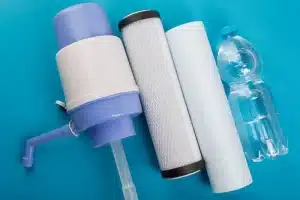
- Dual-Stage Carbon Blocks: Not all carbon is equal. Compressed carbon blocks provide more surface area and longer contact time than the loose granules found in cheap pitchers.
- Ion Exchange: This technology uses “charged” resins to attract and trap PFAS ions. It is often used in larger, more complex systems.
Before investing in a system, always look for the NSF/ANSI 53 or 58 certification specifically for PFAS reduction. Without this third-party verification, a manufacturer’s claim of “removing forever chemicals” is just a marketing promise.
Taking the Next Step for Your Home
The reality of 2026 is that we can no longer “set it and forget it” when it comes to water safety. Even the most expensive filtration system is only as good as its last maintenance check.
If you live in a multi-unit building in Hoboken or Fort Lee, your water has traveled a long way through complex pipes before reaching your tap. For the latest updates on localized trends, checking the PFAS Water Watch blog can help you stay ahead of emerging issues in the regional supply.
The takeaway isn’t that filters are useless; it’s that they require a strategic approach.
- Test your filtered water: Don’t just test the tap; test the water after it has gone through your filter to ensure it’s doing its job.
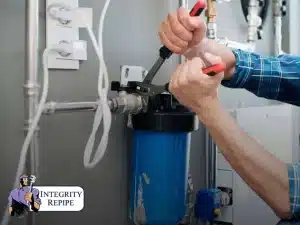
- Over-maintain: Change your filters 15-20% earlier than the manufacturer recommends to avoid the “breakthrough” effect.
- Upgrade to RO: If you have vulnerable members in your household, moving to a Point-of-Use Reverse Osmosis system is the most reliable way to handle the “forever” nature of these chemicals.
Conclusion
The fact that forever chemicals can linger even in filtered water systems is a sobering reminder of how pervasive these industrial compounds have become. However, by understanding the limitations of our current technology and being proactive with testing and maintenance, we can significantly reduce our exposure.
We don’t have to be victims of our infrastructure. With the right tools and the right information, we can ensure that the water in our homes is truly as clean as it looks.
If you have questions about a specific filter brand or want to schedule a professional test for your home, please contact us today. Let’s make sure your filtration system is working for you, not against you.