For many residents in densely populated urban centers like Hoboken and Fort Lee, there is a lingering question that surfaces every time a new water quality report is released: If we know these chemicals are harmful, why are they still in our water? We live in an era of incredible technological advancement. We can build skyscrapers that sway safely in high winds and develop vaccines in record time. Yet, when it comes to the clear liquid flowing from our kitchen taps, we are struggling to eliminate a group of synthetic compounds known as PFAS (per- and polyfluoroalkyl substances).
The persistence of these “forever chemicals” in urban drinking water isn’t due to a lack of concern from local utilities. Rather, it is the result of a “perfect storm” of chemical engineering, aging infrastructure, and a global legacy of industrial use that has embedded these molecules into the very water cycle we depend on.
The “Forever” Bond: A Chemical Fortress
To understand why PFAS are so hard to remove, we have to look at their molecular structure. PFAS are defined by a chain of carbon atoms bonded to fluorine atoms. In the world of organic chemistry, the carbon-fluorine bond is one of the strongest and most stable bonds in existence.
This bond is what made PFAS so useful for decades. It is why your non-stick pan doesn’t melt, why your raincoat sheds water, and why firefighting foams can extinguish high-intensity fuel fires. But the same property that makes them indestructible in a frying pan makes them nearly impossible to break down in nature. You can read more about these properties in our PFAS overview.
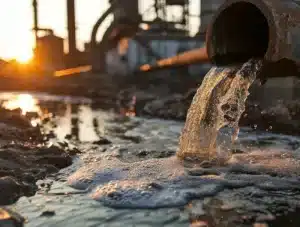
When these chemicals enter the environment—whether through industrial discharge or the washing of consumer goods—they don’t “rot” or degrade. They simply move. In urban areas, they travel through soil and into groundwater, eventually finding their way into the intake pipes of municipal water systems.
The Urban Convergence: Why Cities are Harder to Clean
Urban areas like the Gold Coast of New Jersey face a unique set of challenges. In a city like Hoboken, the water system is a high-volume, high-pressure operation. While a private well in a rural area might serve one family, an urban water main serves thousands.
There are three primary reasons why urban systems continue to show PFAS presence in recent testing data:
- Treatment Plant Limitations: Most municipal water treatment plants were designed decades ago to filter out pathogens (like bacteria) and sediment. They were not built to capture microscopic synthetic molecules. Conventional treatments, such as chlorine disinfection or standard sand filtration, have zero effect on PFAS.
- Short-Chain Substitutes: As older PFAS like PFOA and PFOS were phased out, manufacturers replaced them with “short-chain” PFAS (like GenX or PFBS). While these were marketed as safer, they are actually more mobile in water and even harder to catch with standard carbon filters.
- The “Recycling” Effect: In urban environments, wastewater and drinking water sources are often closely linked. PFAS that are washed down the drain in one town may eventually be discharged into a river that serves as the drinking water source for the town downstream.
The Regulatory Lag
Another reason these chemicals remain present is the gap between scientific discovery and enforceable PFAS regulations. For a long time, the federal government had only “health advisories,” which are non-binding suggestions.
It wasn’t until very recently—with the EPA’s 2024 and 2025 rulings—that strict, enforceable Maximum Contaminant Levels (MCLs) were set at the federal level. New Jersey has been more proactive, setting its own limits years ahead of the rest of the country. However, once a regulation is passed, water utilities often have years to secure funding, design upgrades, and install the massive filtration systems required to meet those standards.
According to the EPA, the transition to a truly “PFAS-free” municipal supply is a multi-billion dollar undertaking that will take the better part of the next decade to fully implement across the United States.
The Scale of the Filtration Challenge
Even when a city decides to install PFAS-specific filtration, the physics are daunting. To remove these chemicals, utilities typically use one of three advanced technologies:
- Granular Activated Carbon (GAC): Think of this as a massive version of a charcoal pitcher filter. The PFAS “stick” to the carbon. However, the carbon becomes “spent” quickly and must be incinerated at extremely high temperatures to destroy the chemicals—an expensive and energy-intensive process.
- Ion Exchange Resins: These use tiny “beads” that act like magnets to pull PFAS out of the water. Like GAC, these beads eventually fill up and must be replaced.
- Reverse Osmosis (RO): This is the most effective method, but it is also the most expensive and creates a “brine” of concentrated PFAS that then has to be disposed of elsewhere.
For a city like Fort Lee or Hoboken, building a facility capable of treating millions of gallons a day using these methods is a massive engineering project. Many residents look to our FAQ section to see if their current building’s system is enough to bridge the gap while the city upgrades its main plants.
The Role of Legacy Contamination
Even if every factory in the world stopped using PFAS today, the chemicals already in our urban soil and groundwater would continue to leach into our water supplies for generations. This “legacy” contamination is particularly high in New Jersey due to our dense industrial history.
Research from the Environmental Working Group (EWG) has shown that urban areas near historic airports, military bases, and manufacturing hubs have the highest persistent levels of PFAS. In these locations, the soil acts as a reservoir, slowly releasing “forever chemicals” into the water table every time it rains.
Staying Informed in the Interim
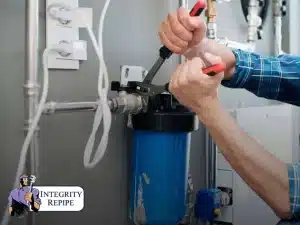
The reality of 2026 is that municipal water is in a state of transition. We are moving toward better filtration, but we aren’t there yet. This is why our PFAS Water Watch blog frequently highlights the importance of “point-of-use” filtration—home systems that can act as a final safety net.
While the city works on the large-scale solutions, parents and health-conscious residents are taking matters into their own hands by testing their own taps and installing certified home filters.
Conclusion
PFAS are still present in our urban drinking water because they were designed to be indestructible, and our current water infrastructure was not designed to stop them. We are currently playing a massive game of “catch-up,” trying to upgrade 20th-century systems to handle 21st-century chemical challenges.
Progress is being made, and the new regulations are a massive step in the right direction. But for now, the presence of these chemicals remains a reality of urban living—one that requires us to stay informed, stay vigilant, and continue advocating for the protection of our most vital resource.
If you are concerned about the water in your specific neighborhood or building, please contact us for information on local testing and filtration resources. Knowledge is the only way to ensure that “forever” doesn’t have to mean “for everyone.”