In the vibrant community of the South Bronx, where charter schools often serve as beacons of opportunity and safety for thousands of students, a new environmental concern has emerged in early 2026. What began as a single parent’s inquiry during a PTA meeting has unfolded into a borough-wide conversation about “forever chemicals” and the safety of the water our children drink every day. Following a private laboratory audit, significant levels of Per- and Polyfluoroalkyl Substances (PFAS) were detected in the drinking fountains of a prominent local charter school, sparking immediate calls for transparency and infrastructure reform.
This incident highlights a critical gap in our current school safety protocols. While New York schools have long been required to test for lead, the 2026 regulations regarding synthetic chemicals like PFAS are still being integrated into standard facility management. For Bronx families, this story is a powerful reminder that parental advocacy is often the first line of defense against invisible environmental threats.
The Power of a Single Question
The situation began when a mother, concerned by recent news reports of PFAS contamination in New York City’s groundwater, asked a simple question during a school facilities tour: “When was the last time this water was tested for anything other than lead?” When the school administration admitted that PFAS testing was not part of their standard mandate, the parent offered to facilitate an independent audit.
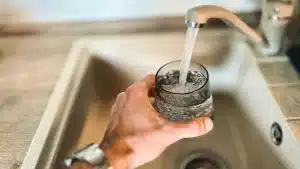
The resulting testing data was a wake-up call. The samples from the hallway drinking fountains showed PFOA and PFOS levels that exceeded the EPA’s newly enforced 4 parts per trillion (ppt) limit. For the school’s leadership, the results were devastating; they had assumed that because the building was relatively modern and the water ran clear, it was safe. This discovery is part of a growing trend we track on our blog, where localized “hot spots” of contamination are found in institutions that otherwise appear to be in full compliance with older city-wide standards.
Why Schools Are Vulnerable to PFAS
The presence of PFAS in a Bronx school isn’t necessarily a sign of a localized spill. Instead, it often points to the complex way these chemicals interact with urban infrastructure. As we detail in our pfas-overview, PFAS are highly mobile surfactants. In a dense environment like the Bronx, these chemicals can migrate from historic industrial sites into the soil surrounding water mains.
Schools, which often have large footprints and extensive internal plumbing networks, are particularly susceptible to “stagnation spikes.” During weekends or school holidays, water sits in the pipes, allowing for the slow leaching of contaminants from old gaskets, valve lubricants, or the mineral scale that lines the city’s trunk mains. When the children return on Monday morning and press the button on the water fountain, they may be receiving a concentrated dose of whatever has accumulated in the pipes. Without a comprehensive pfas-overview of the building’s specific plumbing, these risks remain hidden.
The 2026 Regulatory Landscape for NYC Schools
As we move through 2026, the regulatory environment is shifting beneath the feet of school administrators. The EPA’s National Primary Drinking Water Regulation has fundamentally changed how we define “safe” water. Previously, a school might have pointed to a state guideline of 10 ppt as a reason not to worry. Today, the 4 ppt federal limit is the standard, and many schools are finding themselves in a state of technical non-compliance.
For Bronx parents, interpreting the regulations is a matter of child health. Scientific consensus in 2026 is clear: children are at the highest risk from PFAS exposure because their bodies are still developing. Exposure at a young age is linked to a suppressed immune response, meaning vaccines may be less effective, and children may be more prone to common childhood illnesses. In a borough that already faces significant health disparities, the addition of “forever chemicals” to the school environment is a burden that families are no longer willing to ignore.
The Failure of Standard School Filtration
Following the discovery, the Bronx charter school initially hoped that their existing “bottle filler” stations would be enough to solve the problem. These units often feature a basic carbon filter. However, the school soon learned that most of these standard filters are designed to improve taste and remove chlorine, not to strip away the resilient carbon-fluorine bonds of PFAS.
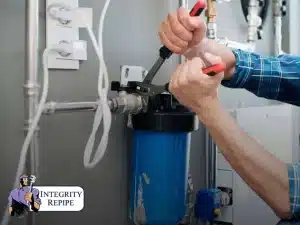
In our faq section, we explain that effective PFAS removal requires “extended contact time” with specialized media like high-density Granular Activated Carbon (GAC) or Reverse Osmosis (RO) membranes. The school’s existing filters were only removing a fraction of the PFAS. This realization led the board to approve an emergency capital project to install a centralized, “point-of-entry” filtration system that protects every tap in the building—from the cafeteria kitchen to the locker room showers.
Community Impact and the “Ripple Effect”
The discovery at the charter school has had a ripple effect across the Bronx. Other schools, both public and private, are now facing similar questions from parents. Community boards in the South Bronx are calling for a borough-wide water audit that goes beyond the city’s centralized reports.
This is a movement for environmental justice. Residents are pointing out that while luxury buildings in Manhattan may already have high-end filtration, the children of the Bronx deserve the same level of protection. By demanding transparent testing data, these parents are forcing a conversation about who is responsible for the “last mile” of water safety in our schools. It is a topic that has dominated our blog in 2026, as more “unlikely” locations turn up positive results for forever chemicals.
What Parents Can Do Today
If you have children in a Bronx school—or any school in the tri-state area—the lessons from this charter school are clear:
- Ask for Data: Request the most recent 2026 water quality report for your specific school building, not just the city-wide summary.
- Advocate for PFAS Screening: Push your school board to include PFAS in their annual safety audits.
- Look for Certified Solutions: If your school uses bottle-filling stations, ensure the filters are specifically certified to NSF/ANSI Standard 53 for PFOA and PFOS reduction.
Conclusion: Turning Advocacy into Infrastructure
The story of the Bronx charter school ends with a positive shift. Today, that school is one of the few in the borough that can provide verified testing data showing “Non-Detect” levels for PFAS. It took a parent’s courage to ask a question and a school’s willingness to listen to create a safer environment for hundreds of children.
The most effective next step for any concerned parent or educator is to move from suspicion to science. If you have questions about the water quality in your local school or if you are unsure how to read a laboratory report, the best path forward is to contact a specialist today. We can help you understand the pfas-overview for your specific neighborhood and provide the tools you need to ensure our schools remain safe havens for our children’s future.