In the bustling rental market of Long Island City, Queens, a young professional couple recently moved into what they considered a “luxury” high-rise. The building featured floor-to-ceiling windows, a rooftop pool, and a modern kitchen equipped with high-end appliances. However, like many renters in 2026, they were increasingly aware of the environmental headlines surrounding New York City’s aging infrastructure and the emergence of “forever chemicals.” Following a neighbor’s casual mention of a localized water report, they decided to conduct their own independent audit.
The laboratory results they received didn’t just provide a data point; they triggered a chain reaction. The testing data revealed concentrations of PFOA and PFOS that were nearly double the new federal health advisory levels. For a household that had been drinking “straight from the tap” under the assumption that a luxury building equaled pure water, the news was a shock. This discovery in a standard Queens rental sparked an emergency filter upgrade that has since become a cautionary tale for tenants across the borough.
The Discovery: Beyond the “Champagne of Tap Water” Myth
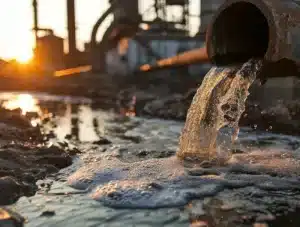
New York City has long relied on its reputation for having some of the best municipal water in the world. Sourced from the protected Catskill and Delaware watersheds, the water enters the city’s massive distribution network at a high level of purity. However, as we move through 2026, the “last mile” of that journey is coming under intense scrutiny. In a dense, industrial-legacy borough like Queens, the water travels through miles of vintage pipes, storage tanks, and local distribution lines that can introduce variables.
When the lab results arrived, the couple found themselves interpreting the regulations for the first time. They learned that while the city’s water might be compliant at the reservoir, localized factors—such as soil contamination from historic Queens manufacturing sites or the building’s own internal plumbing components—can lead to elevated PFAS levels at the kitchen sink. The pfas-overview provided by the lab was clear: these chemicals are persistent, bioaccumulative, and can bypass the standard carbon block filters found in most refrigerator dispensers.
Why Standard Filters Failed the “Forever Chemical” Test
One of the most frustrating realizations for the tenants was that their existing “designer” refrigerator filter was essentially a placebo for PFAS. Most basic filters are designed to improve the aesthetic quality of water—removing the taste and odor of chlorine. However, PFAS molecules are incredibly small and have a unique chemical structure that requires specific “contact time” with specialized media to be effectively removed.
The 2026 testing data showed that the refrigerator filter was only reducing the PFAS concentration by a negligible 8%. For a family concerned about long-term health risks—including immune system suppression and endocrine disruption—this was unacceptable. The situation demanded an emergency upgrade to a system capable of handling the specific carbon-fluorine bonds that make PFAS so difficult to eliminate.
The Emergency Upgrade: Moving to Under-Sink RO and GAC
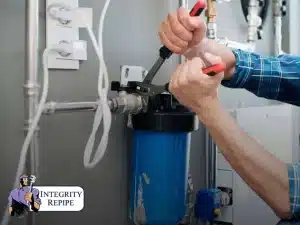
Within 48 hours of receiving their results, the tenants worked with their building management to install a dual-stage filtration system. This wasn’t a simple pitcher or a faucet-mounted unit; it was a high-capacity combination of Granular Activated Carbon (GAC) and a specialized Reverse Osmosis (RO) membrane.
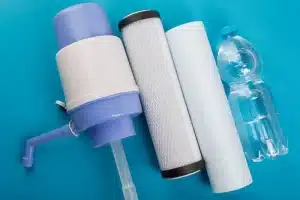
In the 2026 filtration market, GAC is the gold standard for PFAS adsorption. As we detail in our pfas-overview, the porous nature of the carbon provides a massive surface area that “traps” PFAS molecules as the water passes through. By following the GAC stage with a high-rejection RO membrane, the system provided a secondary barrier against any remaining trace contaminants. The result was a dramatic shift in the building’s localized testing data, bringing the PFAS levels from “at-risk” to “non-detect.”
The Building Management Response: A Neighborhood Precedent
What started as an individual tenant’s concern quickly evolved into a building-wide conversation. In 2026, renters in Queens are highly informed and increasingly mobile; they are willing to move if their health concerns are not addressed. Recognizing this, the building management didn’t just approve the individual upgrade—they used the incident as a catalyst to review the entire complex’s water safety plan.
The management team contacted an environmental consultant to perform a building-wide audit. This proactive stance is a growing trend on our blog, as landlords realize that “water security” is now a key amenity for luxury rentals. By providing certified filtration as a standard feature, the building was able to turn a potential PR crisis into a marketing advantage, attracting health-conscious tenants who were wary of the “forever chemical” headlines in other parts of the borough.
Interpreting the 2026 Legal Landscape for Renters
The Queens rental incident also highlighted a major gap in current regulations. Under New York law, landlords are required to provide water that meets health standards, but those standards are often slow to catch up with the latest federal advisories. In 2026, the EPA’s enforceable MCL of 4 ppt for PFOA and PFOS has put many older buildings in a state of technical non-compliance.
For renters, the faq section of our site has become a vital resource for understanding their rights. Can a tenant break a lease over high PFAS results? Can they demand a filter installation? While the legalities vary, the “emergency upgrade” in Long Island City proved that data is the ultimate leverage. When a tenant can provide a certified lab report showing that their water exceeds federal health goals, most landlords are motivated to act quickly to avoid liability or vacancy.
The Long-Term Impact of the Queens Discovery
The story of the Long Island City rental has rippled through the Queens real estate community. It has forced a move away from the “one-size-fits-all” approach to water quality. In 2026, we are seeing more tenants requesting “water quality riders” in their leases, and more developers integrating high-end filtration during the construction phase.
The “emergency upgrade” was more than just a plumbing fix; it was a shift in consciousness. It proved that in an urban environment like Queens, you cannot assume your water is safe just because your building is new or your rent is high. The invisible legacy of the borough’s industrial past—combined with the persistence of modern chemicals—requires a proactive, data-driven approach to household safety.
Conclusion: Taking Ownership of Your Tap
The couple in Queens went from being “surprised renters” to “informed advocates.” Today, their water is tested every six months, and they are the first to tell their neighbors that a “champagne” reputation doesn’t protect you from a 2026 reality. Their experience serves as a roadmap for any tenant who suspects their water might be a “health flag.”
The most effective next step for any renter in Queens—or across the five boroughs—is to verify the specific testing data for their own unit. If you haven’t performed a private audit and are relying on a building-wide report from three years ago, you are operating with a blind spot. The best path forward is to contact a specialist today. We can provide a comprehensive pfas-overview for your specific neighborhood and help you determine if your home requires its own “emergency filter upgrade.”